Irish Beef Stew: A Hearty Comfort Food Classic
It only takes a few gray clouds to get me dreaming about a pot of Irish Beef Stew bubbling away in the oven. There’s something almost magical about leaning in close, letting the steam fog your glasses, and catching all those deep, earthy aromas—malty stout, sweet root veggies, and that irresistible, slow-cooked beef. I’ve spent enough chilly evenings chasing warmth in a bowl to know there’s nothing quite like this stew when you need real comfort. It’s not fancy food, but goodness, does it deliver on flavor.
This is the kind of meal you make for the people you care about most—hearty, rustic, and utterly honest. You’ll start out with just a handful of ingredients you probably already have, but by the time this stew has simmered to perfection, the flavors become so intensely rich it tastes like you conjured up a secret recipe out of nowhere. Every time I ladle it out, I watch it vanish—so don’t count on leftovers.
Slow Sunday afternoons, midweek “I can’t do one more thing” nights, or even when you’re feeding a hodgepodge of friends and family, Irish Beef Stew always manages to steal the spotlight.
When Irish Beef Stew Steals the Show
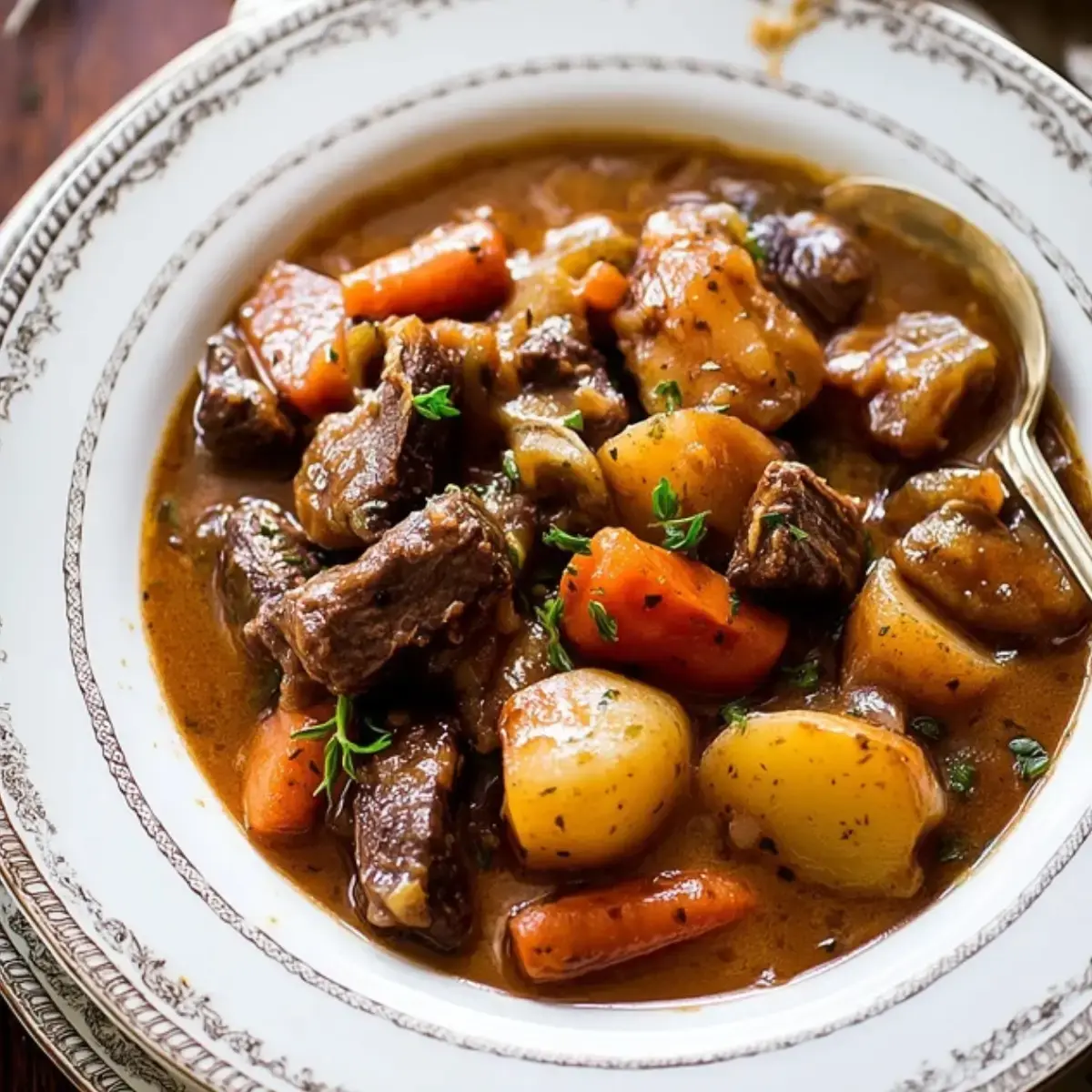
There’s a time for delicate dishes and fussy presentations—but not in the world of Irish Beef Stew. Here, unruly hunks of beef tumble into the pot with grips of carrots and potatoes, and everything gets blanketed in the inky richness of stout. As it cooks, the house fills with a scent so inviting you’ll catch people hovering around the kitchen well before dinner’s due.
Irish Beef Stew isn’t just another “winter warmer.” Somehow, it feels just as right in early spring, when the damp seeps into your bones, or on a blustery autumn night. It lands on the table looking rustic and rugged, but the first bite tells a very different story—silky, velvety beef that falls apart at the mere nudge of a spoon, all tangled up with sweet, soft carrots and potatoes that soak up those deep, savoury juices. When the weather (or life) calls for something bold and satisfying, there’s really nothing to match the sheer coziness of a proper Irish Beef Stew.
The Ingredients That Give This Stew Its Depth
Big flavor rarely comes from overcrowded lists. The secret to Irish Beef Stew’s unforgettable richness sits inside each ingredient you toss into the pot.
- olive oil – gets everything started with a gentle hit of richness and helps the meat develop that golden-brown crust.
- Salt and pepper – the simple base notes, working together to draw out the best in the beef and veggies.
- Stewing beef – you want something marbled and a little tough; the long, slow cook makes it meltingly soft and loaded with flavor by the end.
- Onion – not just for background, it brings sweetness and body to the broth after that extended simmer.
- Thyme – whether fresh or dried, it adds a woodsy brightness that cuts right through all that meaty depth.
- Garlic – a single clove is all it takes; when slowly cooked, it melts into the base, adding savory warmth without overpowering anything.
- Flour – just enough to give the broth a silky, slightly thickened finish, catching every drop of flavor.
- Water or beef stock – beef stock cranks up the savoriness, but even plain water will let the veggies and beef star.
- Guinness (or other stout) – pours in that signature dark-malt depth, with a touch of bitterness and toast that gives this stew its real character.
- Bay leaf – it does its subtle work in the background, infusing everything with a gentle fragrance.
- Carrots – hearty, sweet, and robust, they soak up the stew liquid and round out the flavor with every bite.
- Waxy potatoes (like red potatoes) – these hold their shape, offering buttery texture and soaking up plenty of broth without turning to mush.
See the recipe card below for the full list of ingredients and measurements.
Crafting Comfort: How the Stew Comes Together
If you go slow and let the oven do the heavy lifting, this stew really couldn’t be easier. Comfort food this good has very few shortcuts—except maybe sneaking tastes as it cooks.
- First off, preheat your oven to a gentle heat. Low and slow wins the race here.
- Grab your biggest, heaviest Dutch oven or lidded casserole pot. Warm up olive oil over medium heat and start browning chunks of beef with a sprinkle of salt and pepper. Don’t crowd the pan—work in batches to make sure each piece gets its moments of caramelized glory. That’s your first layer of flavor right there.
- With the beef browned and bumped aside in the pot, drop the heat down and slide in chopped onions and a handful of thyme. Let them cook slowly, turning translucent and fragrant as the kitchen fills up with that telltale stew aroma. Right at the end, add a bit of minced garlic. Give it just enough time to lose its edge—30 seconds usually does it.
- Scatter in the flour and toss things so the beef gets a thin, sticky coat. Now it’s time for a bit of deglazing: pour in water or beef stock, scraping up all the browned bits from the bottom with a wooden spoon. Everything that’s stuck down there? That’s flavor waiting to happen. Next comes the Guinness (or whatever stout you’ve got on hand) along with a bay leaf or two. Turn the heat up, bring it all to a bubble, then throw the lid on and transfer straight to the oven for the first chapter of its slow-cook journey.
- After an hour of slow bubbling, pull the pot out and stir in big chunks of carrot and potato. Add more water if things are looking dry, cover back up, and slide it into the oven for another long stretch—this is when everything starts turning to velvet. For the last ten minutes, I always take the lid off to let the very top thicken just a little and the aroma really gets a chance to do its work.
- When it’s time, serve it hot with hunks of crusty bread (that broth is too good to leave behind) and a scattering of fresh parsley if you’re feeling fancy.
Building Layers of Flavor and Texture
What always stuns me about Irish Beef Stew is how a few basic tricks transform cheap, cheerful ingredients into something almost luxurious. It’s all about the way each step deepens the character of the dish. Browning the beef gives you those savory, caramelized notes. The slow, gentle bake in the oven means the beef turns utterly tender—no knife needed, just a gentle nudge from your spoon.
The Guinness softens during cooking, leaving behind a deep malty backbone—almost chocolaty, but never sweet. Stewing for hours lets the potatoes soak up all that flavor but still stand tall in the bowl, while carrots quietly bring their mellow sweetness. The sauce should have a body to it, something you can mop up with bread. Every spoonful has a bit of everything: ultra-soft beef, earthy root veg, and that luscious, glossy broth.
The Little Tweaks That Make All the Difference
A few scraps of wisdom go a long way with Irish Beef Stew. Never rush the browning—you want the beef to pick up as much color (and flavor) as possible. Use a pot that holds heat well and resist the urge to peek too often; every time you open the lid, heat escapes and the magic takes a little longer. If all you have is lamb or another red meat, go for it—the spirit of the stew thrives on flexibility.
No Guinness? Any dark stout or porter will do a fine job, though it will tweak the flavor slightly. And if you’re out of fresh herbs, dried thyme will pinch-hit just fine.
For storing, let the stew cool before you stash it in the fridge. It will keep and actually tastes even better the next day after the flavors do a slow mingle together. If you need to freeze, divide into individual servings—just don’t freeze potatoes, as they can get a bit grainy in texture on thawing. Reheat gently to avoid overcooking the beef or turning the veggies to mush.
Serving Irish Beef Stew for Maximum Comfort
This stew is hearty enough to stand on its own, but I never turn down a thick slice of rustic bread (proper butter, too) to swipe through the bowl at the end. It’s a classic fit for a family dinner, but just as good for a low-key night by the fire or when you’ve got a crowd around the table. Serve it straight from the pot for a casual, homey feel—let everyone help themselves.
It’s also surprisingly good with a sharp salad on the side, which balances out all that richness. And nothing says “Irish feast” more than pouring an extra glass of Guinness alongside your bowl—let the flavors echo each other for the real pub experience.
FAQs about Irish Beef Stew
Can I make Irish Beef Stew ahead of time?
Absolutely—Irish Beef Stew develops even deeper flavor if you make it a day in advance. Let it cool completely, store it tightly covered in the fridge, and simply reheat gently on the stove when you’re ready to serve.
Are there good substitutes for Guinness in Irish Beef Stew?
If you can’t get Guinness, any dark stout or porter will work. For an alcohol-free version, beef stock is the best swap. You’ll lose that malty note, but it will still be rich and delicious.
How should I store and reheat leftover Irish Beef Stew?
Allow the stew to cool before transferring it to an airtight container. It’ll keep for several days in the refrigerator and reheats best over low heat on the stove to preserve the texture of the meat and potatoes.
Can I freeze Irish Beef Stew?
Yes, but with a caveat: potatoes tend to change in texture when frozen, often becoming grainy or mealy. If you know you’ll want to freeze portions, try leaving the potatoes out and adding freshly cooked ones when reheating.
A bowl of Irish Beef Stew feels like a bit of home wherever you are—warm, quietly robust, and completely satisfying. The slow-cooked beef, malty broth, and tender vegetables come together for a meal that soothes and fills in a way only the best comfort food can. Next time you need a reason to gather everyone round the table—or you’re just looking for a way to make a chilly evening memorable—let Irish Beef Stew be the centerpiece. There’s nothing quite like the first spoonful to remind you just how good slow food can be.
More Delicious Recipes
- Hello World: This simple recipe could provide additional inspiration for hearty, comforting meals similar to Irish Beef Stew.

Irish Beef Stew
Ingredients
Equipment
Method
- Preheat the oven to 160℃/300℉
- Heat the olive oil in a large Dutch oven/cast iron casserole pot and brown the beef chunks seasoned with salt and pepper over medium heat until golden. Do this in batches to avoid overcrowding.
- Move the browned beef to one side of the pot and lower the heat, then add chopped onions and thyme, cook over low heat for 8-10 minutes until tender. Then add minced garlic and cook briefly for 30 seconds.
- Add the flour and stir the beef, so it's coated, then add the water or beef stock if using and scrape the bottom of the pot with a spatula to release the brown bits at the bottom. Add the Guinness, one or two bay leaves, turn the heat up and bring to a boil. Then cover with a lid and put in the preheated oven for 1 hour.
- After one hour take out of the oven and add carrots and potatoes cut into large chunks to the pot, stir and add 250ml/1 cup of water, cover with a lid and continue cooking the stew in the oven for 1.5 hours. Take the lid off for the last 10 minutes of cooking.
- Serve with bread and sprinkled with some fresh parsley for more flavour.